Who Is Considered an Hourly Employee?
Learn what defines an hourly employee, how hourly pay works, and what employers and workers should know about hours, overtime, and records.
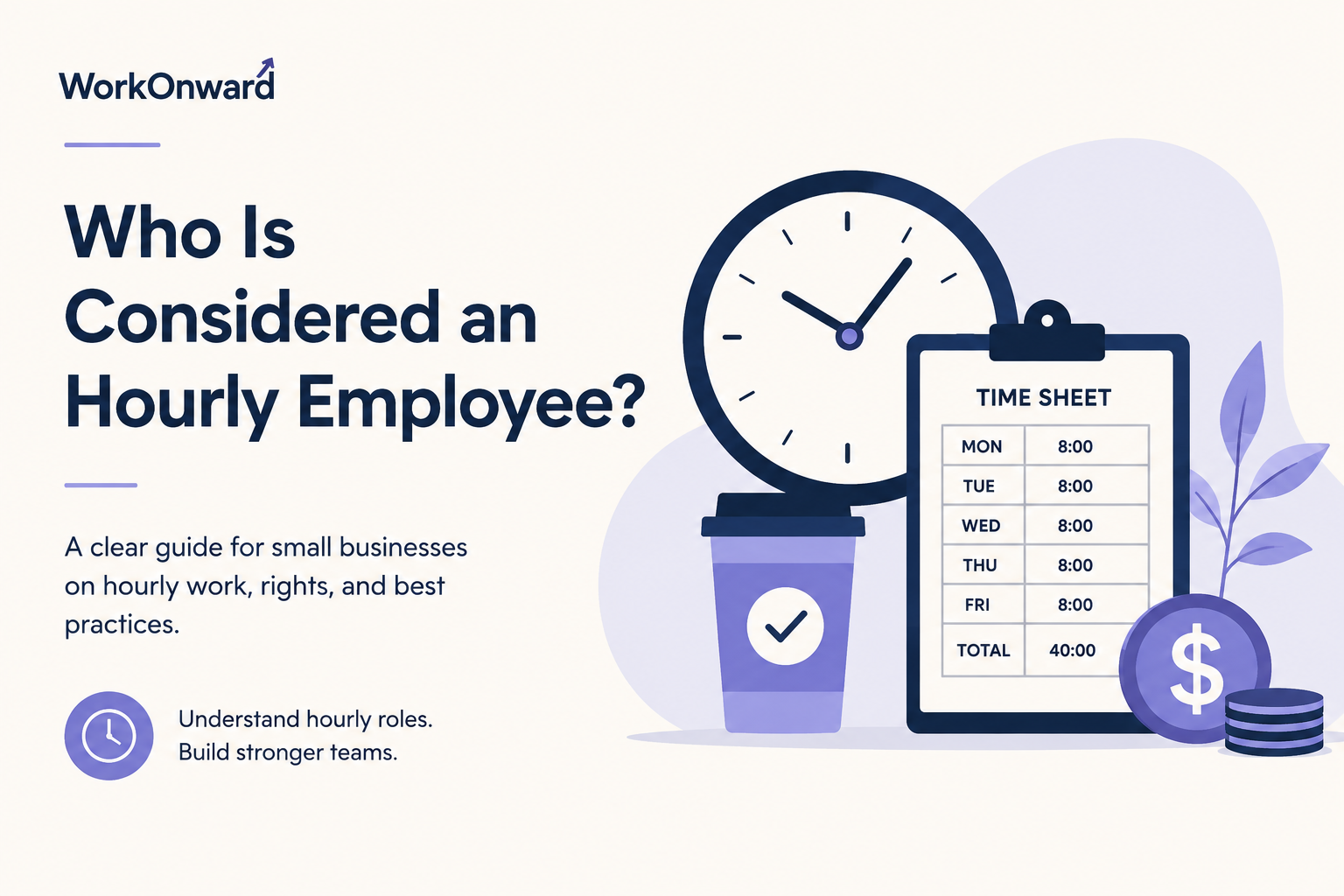
An hourly employee is generally a worker who is paid based on the number of hours they work rather than receiving a fixed salary for each pay period. Hourly roles are common across retail, hospitality, customer service, healthcare, construction, transportation, and many other industries.
Understanding what makes someone an hourly employee can help workers know what to expect from a job and help employers set clear expectations about scheduling, timekeeping, and pay.
What Is an Hourly Employee?
An hourly employee is typically paid a set rate for each hour worked. This set pay can range on average from 17-45+ per hour.
Hourly employees may work full-time or part-time. The number of hours worked does not, by itself, determine whether someone is an hourly employee. The key distinction is usually how the worker is compensated and how the role is classified under applicable wage-and-hour rules.
How Hourly Pay Works
Hourly employees generally track the time they spend working. Depending on the workplace, this may be done with a time clock, scheduling app, timesheet, or another timekeeping system.
An hourly paycheck can depend on several factors. They typically are a certain amount paid per hour, this rate is set based on experience, position, and what the company decides.
Hourly vs. Salaried Employees
The biggest difference between hourly and salaried employees is generally the method of compensation.
Hourly employees are paid according to hours worked. Their earnings can change from one pay period to another if their hours change. Usually there rate is set per hour and therefore there pay varies depending on the exact amount worked per week. There can also be times where this amount increased, such as overtime or holiday work. Note that salaried employees may also get extra money for this as well.
Salaried employees generally receive a predetermined amount of pay for each pay period, subject to applicable wage-and-hour requirements.
The distinction is important, but job titles alone do not determine whether a worker is legally entitled to overtime or other wage protections. Employers should evaluate employee classifications under the laws that apply to their workplace.
Are Hourly Employees Eligible for Overtime?
Some hourly employees are eligible for overtime pay when they work more than the applicable threshold. There are some regulations and standards put into place however there is typically some wiggle room for overtime pay for salaried jobs.
State and local laws may provide additional protections or different requirements as well.
Because overtime eligibility depends on employee classification and applicable law, employers should not assume that every hourly worker has the same overtime rules.
What Counts as Time Worked?
For hourly employees, accurate timekeeping is important. In general, employers need to account for time employees are required or permitted to work, subject to applicable wage-and-hour rules.
Depending on the job, compensable time can include activities such as:
- Performing assigned job duties
- Required work-related tasks before or after a shift
- Certain required training
- Other time that applicable law considers hours worked
Employees should follow their employer's timekeeping procedures and report errors promptly. Employers should maintain accurate records and make sure workers understand how to record their time. Another note is that typically hourly employees are assigned specific hours or time periods for work.
Can an Hourly Employee Work Full-Time?
Yes. "Hourly" describes how an employee is paid, while "full-time" and "part-time" generally describe the employee's schedule or status.
An hourly employee might regularly work 40 hours per week, while another hourly employee might work 15 or 25 hours. Employers may also define full-time and part-time status for purposes such as scheduling, benefits, and internal policies, subject to applicable law.
What Should Employers Tell Hourly Employees?
Clear communication can prevent confusion about pay and scheduling. Employers should make sure hourly workers understand:
- Their hourly rate- The exact amount they are paid for an hour of work.
- How and when they should record their time-This is so there is a proper system for reporting time worked and getting compensated properly.
- When payroll is processed-How long after working do they receive there money.
- How overtime or extra hours are handled-What the pay change is for working overtime or additional non-essential hours.
- How schedule changes are communicated-The amount of time and preparation they are given before being expected for a shift.
- Who to contact about payroll or timekeeping questions-Ensure they know that they are able to contact someone if there is an error or if they have questions on salary or time changes.
Employers should also review their practices regularly to make sure they comply with applicable federal, state, and local requirements.
What Should Job Seekers Look For?
If you are considering an hourly position, ask questions before accepting the job. Useful questions include:
- What is the hourly rate?-This is essentially your salary, determining how much you make can vary however it is important that it stays consistent and fair.
- How many hours are typically scheduled each week?-This is so you can calculate the average amount you make based on the hours and pay per hour.
- Are schedules consistent or likely to change?- How often and how much of a heads up do you get when a shift changes.
- How is time recorded?-Are there any tasks that are not considered work or timed work.
- How are overtime hours handled?-How soon and what amount do they get for overtime/additional hours.
- Are there opportunities for additional shifts?-Can you work additional shifts or is there a set amount of time you can work.
Getting clear answers can make it easier to compare opportunities and understand what your expected earnings may look like.
The Bottom Line
An hourly employee is generally someone whose pay is based on an hourly rate and the time they work. Hourly workers can be part-time or full-time, and some may qualify for overtime protections depending on their classification and applicable wage-and-hour laws.
For both employers and employees, accurate timekeeping, clear expectations, and an understanding of applicable labor requirements are essential. When questions involve a specific legal classification or wage dispute, it is wise to consult authoritative government guidance or qualified legal counsel.


Comments
No comments yet.