I kept meeting incredible workers who couldn't get a foot in the door, and incredible small businesses who couldn't find them. They were often three blocks apart.Holly Oh Diamond · Founder, WorkOnward
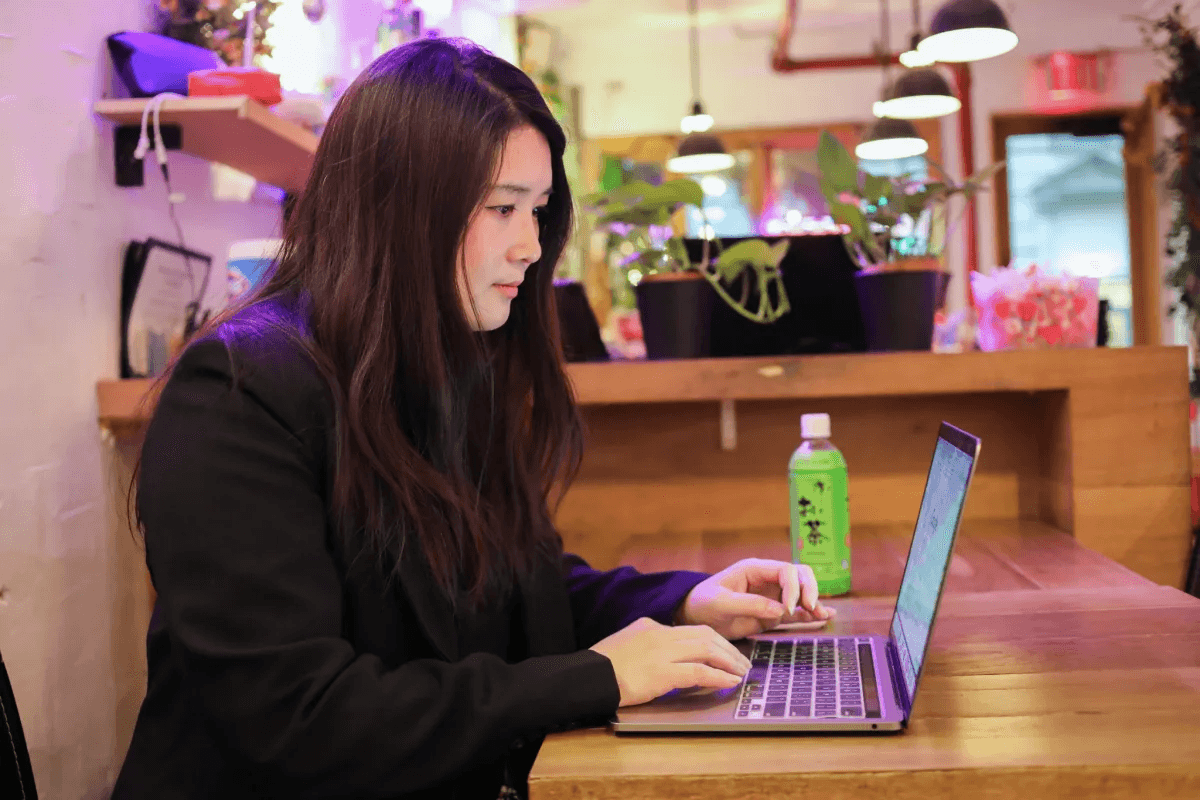
A daughter of immigrants who grew up behind the counter.
Holly is the daughter of Korean immigrants who arrived in New York with very little and built a life one shift at a time. She grew up in the rhythms of small business — early mornings, family meals between rushes, the regulars who became friends, the steady work of keeping a kitchen open and a community fed.
That upbringing taught her what most hiring platforms still don't understand. Small businesses aren't a category. They are the people on the block. They are how neighborhoods stay whole.
She carried that lesson into a decade of recruiting and workforce development — and watched, quietly, where the modern hiring system kept falling short.
The night the sign in the window stopped working.
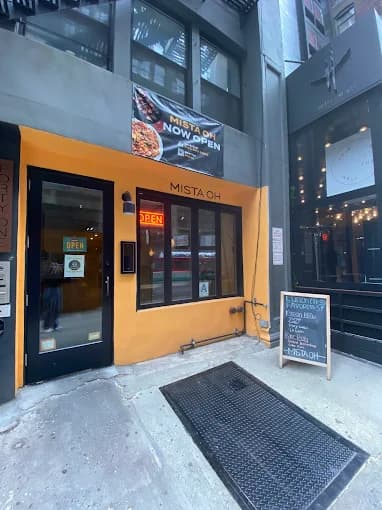
During the pandemic, Holly's mother (aka Mama Mia) wrote a paper sign by hand and taped it to the window. For a generation of small business owners, that sign had always been enough. This time, nobody came.
Holly stood in the dining room one evening and said the thing that, in retrospect, became the company: "Of course they're not coming. Everyone is looking online now. The sign in the window can't reach them anymore."
The way we look for work had moved online. The way local businesses hire hadn't moved with it. The neighbors who would have been perfect for the job didn't know it was open. The owners didn't know how to find them. The handshake economy had lost its handshake.
Why local hiring works better.
Hiring nearby isn't just about convenience. It creates stronger teams, faster hiring, and better day-to-day operations.
Shorter commutes matter.
Workers closer to the job are more likely to arrive consistently and stay longer. Distance is the quietest, strongest predictor of retention we see on the platform.
Faster hiring starts nearby.
Local candidates can interview sooner, start faster, and adapt more quickly to the business.
Neighborhood familiarity helps.
Hiring becomes easier when workers already understand the customers, pace, and rhythm of the area.
Better hiring feels more human.
Not every strong worker has a polished résumé. Sometimes the best fit lives a few blocks away — and shows up early because they walked.
Free to start. Setup takes only a few minutes.
What local hiring actually looks like.
Three businesses, three industries, one shared shape: the right hire was already nearby.
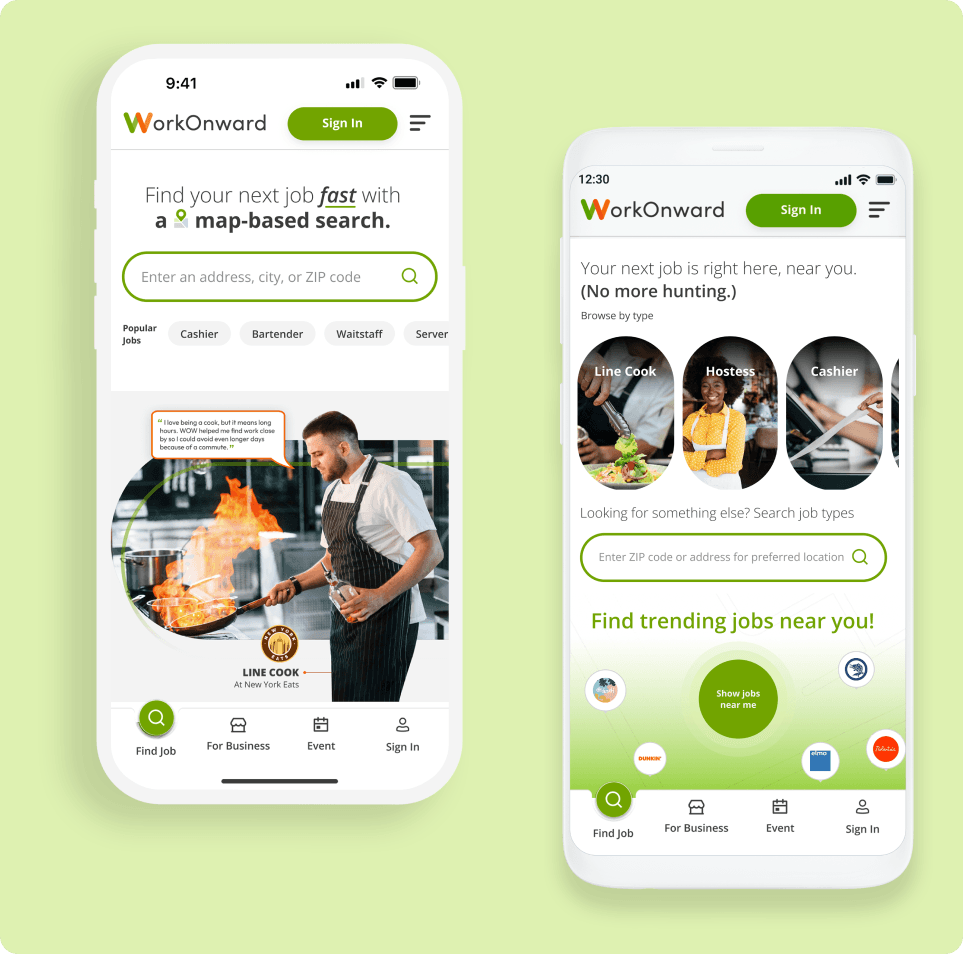 A map-based interface, anchored to your block.
Technology built for Main Street.
WorkOnward starts with a map. Because the question that matters most to a local business — and to a worker walking out the door in the morning — is a question about distance.
Proximity, first.
Jobs and people are shown on the streets they actually live on. The closest match is often the right one.
Inclusive profiles, not resumes.
Workers tell their story in plain language — with translation, audio, and accessibility built in from day one.
Built for one-person teams.
Small businesses post a job in minutes and message candidates like they would a regular customer.
Free where it matters.
Posting a job is free. Keeping a neighborhood employed shouldn't carry a paywall.
Talked about where work is changing.
From podcast couches to global keynotes — the story keeps finding the same audience: people who care about how the next job actually gets filled.
"Bringing dignity to job hunting"
Holly on The Uplifters with Aransas Savas — on her family's restaurant, the night the help-wanted sign didn't work, and why the future of hiring looks more like a neighborhood than a job board.
WorkOnward at Google I/O 2026
A look at how WorkOnward is using human-centered AI to bring hiring closer to home — featured at Google's annual developer keynote. The full talk will live here when it goes online.
Dignity is the product.
Software can be efficient and warm. It can be fast and still leave people whole. We design for both — because if it isn't both, it isn't finished.
- 01Distance has a cost. Long commutes drain wages, time, and energy from people who can least afford to spend them. Geography is a feature, not an afterthought.
- 02The resume isn't the whole person. Workers tell their story in their own words, in their own language, with audio and translation built in.
- 03Small businesses aren't a category — they're neighbors. The tools have to fit a one-person back office, not a Fortune 500 recruiting team.
- 04The handshake stays. Technology can make hiring faster without making it colder.
Choose the side you're on — we built both.
Whether you're hiring for your shop or looking for work close to home, WorkOnward starts in the same place: your block.
Post a job in 4 minutes. Free, forever.
Reach pre-screened, nearby applicants — without paying per click, per post, or per hire.
Find work close to home.
Browse hiring small businesses on a map. Walk-to-work distance, friendlier hours, real humans on the other side.