Sourcing vs Recruiting: What’s the Difference?
Learn the key differences between sourcing and recruiting, and how both play a vital role in building a strong hiring pipeline.
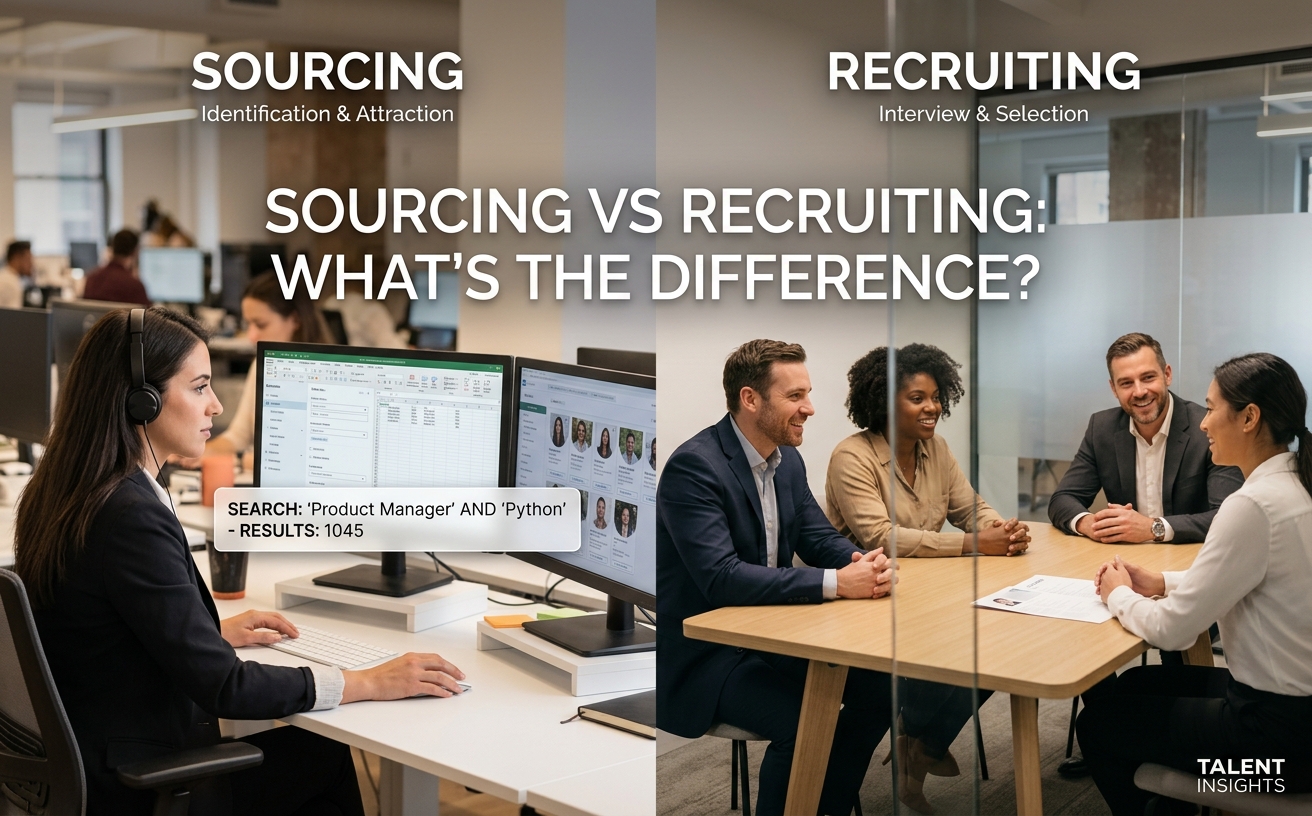
When it comes to hiring, many people use the terms sourcing and recruiting interchangeably. While they are closely related, they are not the same. It is important to understand the difference between sourcing and recruiting as it can help businesses build stronger hiring strategies and improve their ability to attract top talent.
In this guide, we’ll break down what each term means, how they differ, and why both are essential to successful hiring.
What Is Sourcing?
Sourcing is the proactive process of identifying and engaging potential candidates. Often before a job is even open or before candidates apply. This is almost like scouting, you identify potential candidates in preparation to directly reach out to them.
Sourcing focuses on building a talent pipeline by finding people who may be a good fit for current or future roles. This is typically done in roles that reacquire certain backgrounds or previous experiences. However you are not offering or interviewing yet, it's almost like a first glance.
Key responsibilities in sourcing include:
- Searching for candidates on platforms like LinkedIn, job boards, and databases
- Identifying passive candidates (people not actively job hunting)
- Building talent pools for future hiring needs
- Reaching out to candidates to spark initial interest
- Maintaining candidate databases and relationships
What Is Recruiting?
Recruiting begins after candidates have been identified. It is the process of moving candidates through the hiring pipeline, from initial contact to job offer.
Recruiters focus on evaluating candidates, managing communication, and ensuring a smooth hiring experience. This is the process after already choosing and researching the potential candidates. Now you are offering at least an interview if not a job.
Key responsibilities in recruiting:
- Screening resumes and applications
- Conducting interviews and coordinating with hiring managers
- Evaluating candidate qualifications and cultural fit
- Managing communication throughout the hiring process
- Extending job offers and negotiating terms
Key Differences Between Sourcing and Recruiting
While sourcing and recruiting typically overlap, they serve distinct purposes within the hiring process.
1. Focus
- Sourcing: Finding and attracting potential candidates. This is the process of researching potential candidates before even reaching out or contacting them.
- Recruiting: Evaluating and hiring candidates. This is after you have already learned about a candidate and their qualifications and now you are going beyond surface research.
2. Timing
- Sourcing: Happens early, often before a role is filled or even posted. This is the first glance at a potential candidate.
- Recruiting: Happens after candidates enter the pipeline. These are candidates who are already aware of the position.
3. Candidate Type
- Sourcing: Targets passive candidates and talent pools. This is because there is no direct candidates.
- Recruiting: Works with active applicants and sourced candidates. These are people you are preparing to offer a position to and they are actively seeking that position.
4. Goal
- Sourcing: Build a strong pipeline of talent. Setting up for the recruiting process.
- Recruiting: Fill open positions efficiently. You are actively hiring new candidates for open positions.
How Sourcing and Recruiting Work Together
Sourcing and recruiting are not separate processes—they are two halves of a successful hiring strategy.
Here’s how they complement each other:
- Sourcing ensures there is always a pool of qualified candidates
- Recruiting ensures those candidates are properly evaluated and hired
- Together, they reduce time-to-hire and improve candidate quality
Without sourcing, recruiters may struggle to find qualified candidates. Without recruiting, sourced candidates may never convert into hires.
Why the Difference Matters
Understanding the distinction between sourcing and recruiting helps organizations:
- Allocate resources more effectively
- Improve hiring efficiency
- Build stronger long-term talent pipelines
- Enhance candidate experience
- Stay competitive in tight labor markets
For smaller businesses or growing teams, one person may handle both roles. However, as hiring needs scale, separating sourcing and recruiting can lead to better results.
When to Focus More on Sourcing
Prioritize sourcing if you're:
- Struggling to find qualified applicants
- Hiring for niche or hard-to-fill roles
- Wanting to build a long-term talent pipeline
- In an industry that relies heavily on passive candidates
When to Focus More on Recruiting
Prioritize recruiting if you're:
- Having many applicants but low conversion rates.
- The hiring process feels slow or disorganized
- Having candidates drop off/out during interviews
- Needing to improve offer acceptance rates
Final Thoughts
Sourcing and recruiting are both essential parts of hiring, but they serve different purposes. Sourcing brings talent into your pipeline, while recruiting turns that talent into successful hires.
By understanding and optimizing both processes, businesses can build stronger teams, reduce hiring time, and create a better overall candidate experience.
Whether you’re a small business owner or part of a growing HR team, mastering the balance between sourcing and recruiting is key to long-term hiring success.


Comments
No comments yet.