Diversity Hiring: How to Build a More Inclusive Hiring Process
Learn practical ways to build a more inclusive hiring process, reduce bias, and attract talented candidates from a wider range of backgrounds.
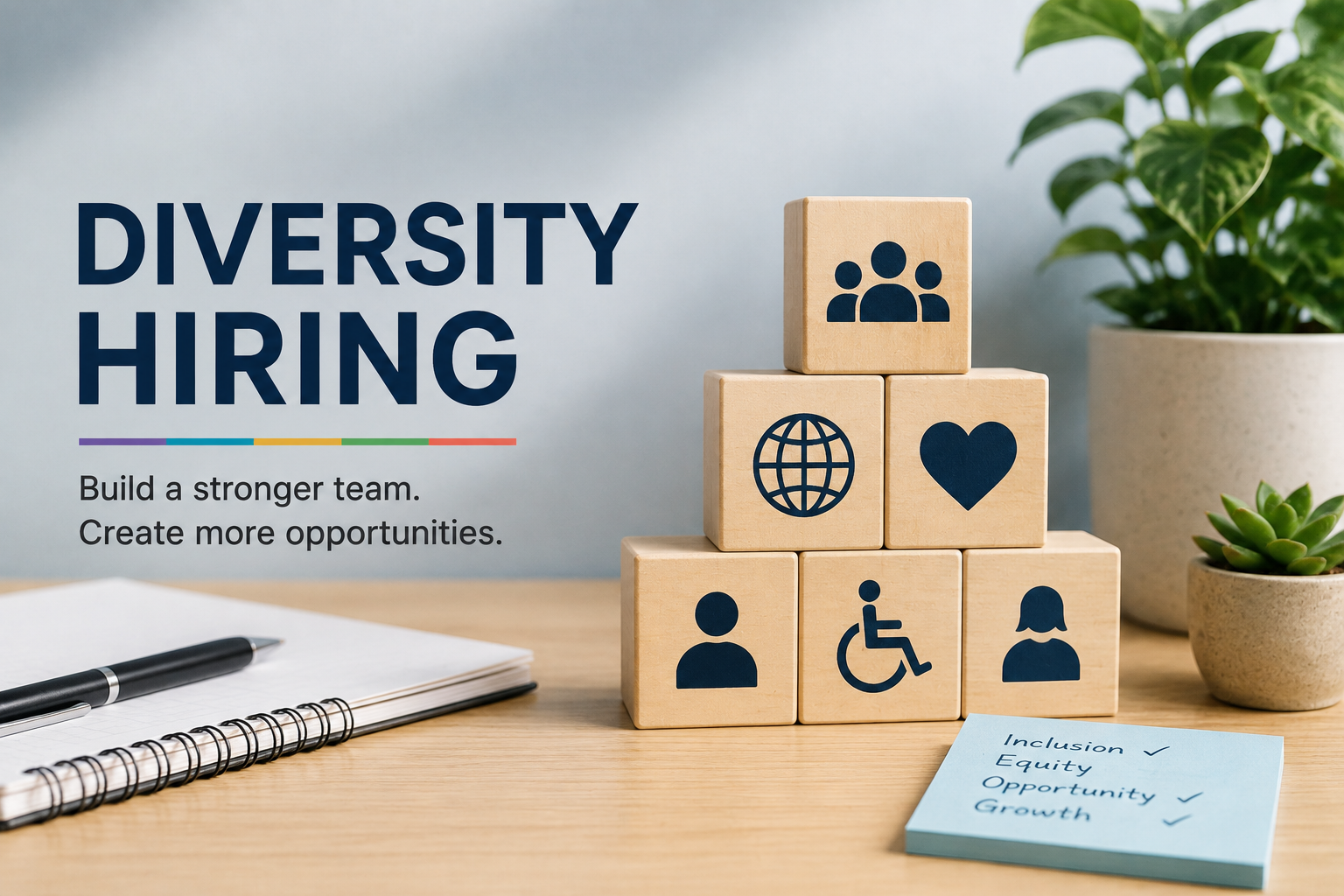
Diversity hiring is about creating a hiring process where qualified candidates have a fair opportunity to be considered, regardless of background or identity. For employers, building a more inclusive process can expand the talent pool, strengthen teams, and help create a workplace where people with different experiences can contribute and grow.
Diversity hiring is not simply about meeting a quota or hiring someone because they belong to a particular group. It is about removing unnecessary barriers, recognizing talent from a broader range of backgrounds, and making sure hiring decisions are based on relevant skills, experience, and potential.
What Is Diversity Hiring?
Diversity hiring refers to recruiting and selecting candidates from a wide range of backgrounds and experiences. Depending on the organization and community, this may include efforts to reach candidates with different:
- Professional and educational backgrounds
- Ages and generations
- Cultural experiences
- Geographic backgrounds
- Abilities and work styles
- Career paths and levels of experience
The goal is to make sure qualified people are not unintentionally excluded by a hiring process that favors a narrow definition of the ideal candidate. Diversity hiring insures that the most qualified people are considered and hired for a wider range of jobs.
Why Diversity Hiring Matters
A broader hiring strategy can help employers find talent they might otherwise miss. Candidates do not all gain their skills through the same schools, companies, industries, or career paths. As a society someone can end up in the same position through extremely different processes and experiences.
Inclusive hiring can also contribute to:
- A larger talent pool: Reaching more communities can introduce employers to candidates they may not encounter through traditional recruiting channels.
- Different perspectives: Employees with varied experiences can bring new ideas and approaches to workplace challenges.
- Stronger candidate experiences: Clear, consistent hiring practices can make the process easier to understand and navigate.
- Better community connections: Local employers can strengthen relationships with a wider range of people in the communities they serve.
- More intentional decision-making: Structured hiring processes can encourage employers to focus on job-related qualifications rather than assumptions.
Common Barriers to Diverse Hiring
Even when employers have good intentions, parts of the hiring process can unintentionally discourage qualified candidates. Many barriers are unintentionally built into hiring processes.
Identifying these barriers is an important first step toward improving the process. It allows for the best opportunities for not only the candidates but also the job. Ensuring the most qualified people get the position.
7 Ways to Improve Diversity Hiring
1. Write More Inclusive Job Descriptions
Start by reviewing job postings before they are published. Clearly separate required qualifications from preferred qualifications, and avoid unnecessary requirements.
Clear descriptions can help candidates understand what truly matters for success in the role.
2. Expand Recruiting Channels
Posting a job in the same places every time can limit who sees it. Consider a broader recruiting strategy posting and advertising a position in multiple places. These places may vary depending on the job so it is important to no the right places for your business.
3. Use Structured Interviews
Structured interviews help candidates receive a more consistent evaluation. Create a core set of job-related questions and use the same evaluation criteria for each candidate.
This does not eliminate every form of bias, but it can make comparisons more consistent and decisions easier to explain. Creating the same general requirements and expectations for everyone.
4. Focus on Skills and Potential
A candidate's previous job title does not always tell the full story of what they can do.
Look for transferable skills that were gained and can clearly be applied to the new position.
Skills-based evaluation can help employers recognize candidates who developed valuable abilities through nontraditional career paths.
5. Build a Consistent Screening Process
Before reviewing applications, establish the criteria that will be used to evaluate candidates. Using consistent criteria can help keep the focus on qualifications that actually relate to the position.
6. Train Hiring Teams
Everyone involved in hiring should understand the organization's expectations for fair and consistent evaluation. Train interviews with clear expectation and criteria to limit biased in the hiring area. Training works best when it is supported by practical processes rather than treated as a one-time activity.
7. Review Your Results
Diversity hiring is an ongoing process. Employers should periodically review where candidates are entering and leaving the hiring funnel. Ask follow up hiring questions to ensure the standards and expectations are continuing. The goal is not simply to track numbers. It is to identify opportunities to make the process more accessible, consistent, and effective.
Diversity Hiring Starts Before the Job Interview
An inclusive hiring strategy should begin well before interviews take place. Job descriptions, recruiting channels, application requirements, screening methods, and interview practices all influence who gets an opportunity to move forward.
Employers should also remember that diversity hiring is only one part of building an inclusive workplace. Once someone is hired, employees need fair access to onboarding, development opportunities, feedback, advancement, and meaningful participation.
Final Thoughts
Diversity hiring is not about choosing candidates based on identity instead of qualifications. It is about creating a fairer path to opportunity and making sure qualified talent is not overlooked because of unnecessary barriers or narrow recruiting practices.
For employers, the most effective approach is practical: define what the job requires, reach a broad range of candidates, use consistent evaluation methods, and regularly review the process.
When hiring practices are designed to recognize skills, experience, and potential, organizations can build stronger talent pipelines while creating a more welcoming experience for candidates.


Comments
No comments yet.