How to Use AI in the Hiring Process
Learn how businesses use AI to improve hiring while keeping people at the center of recruitment.

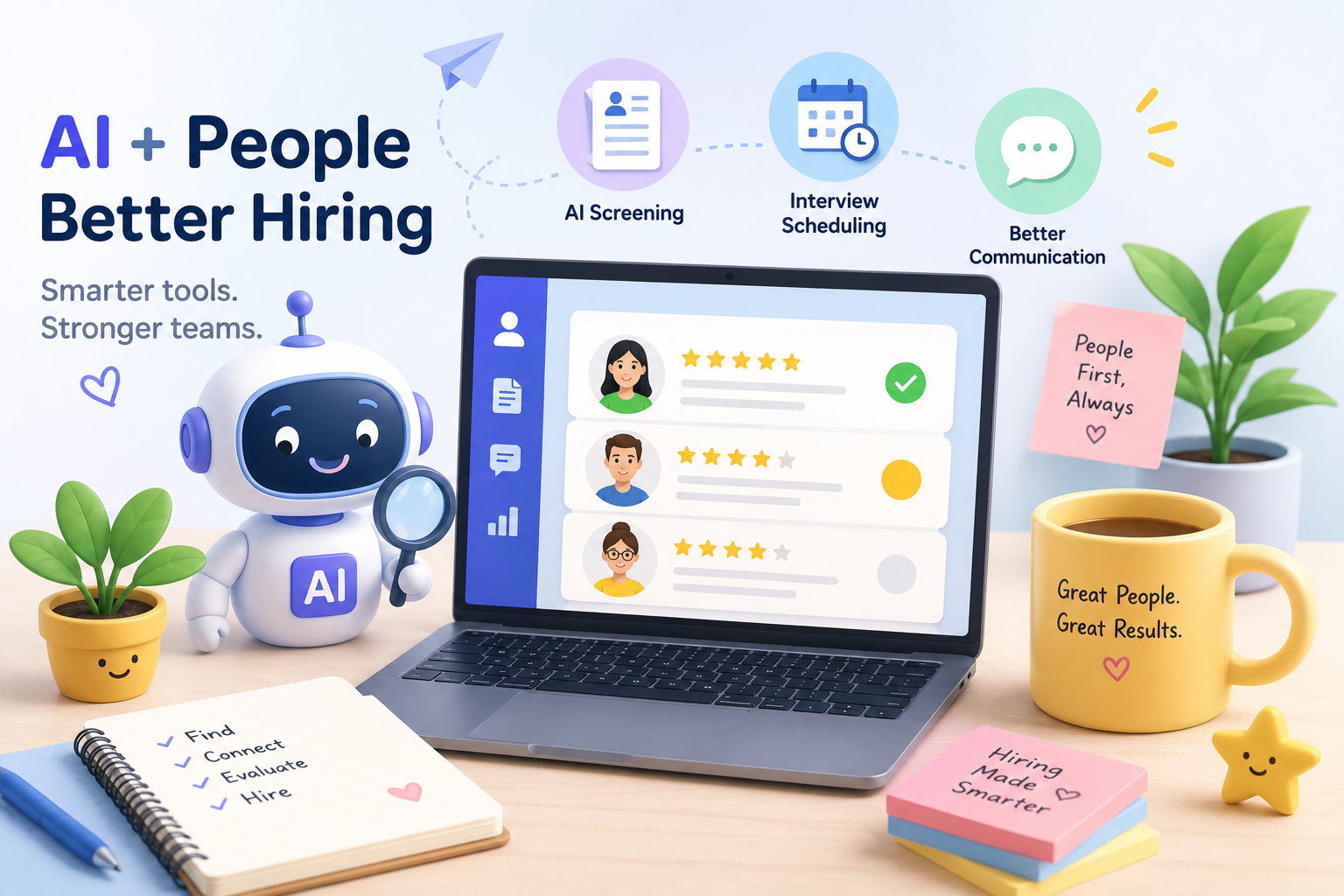
Hiring automation helps businesses manage rising application volumes and increasing competition for qualified talent in the job market. Many human resources (HR) teams now use artificial intelligence (AI)-powered tools to accelerate resume screening and improve hiring decisions without overwhelming internal recruitment staff. While automation improves efficiency and organization, companies must still rely on human oversight to maintain fairness and build meaningful candidate relationships throughout the hiring process.
Why Businesses Use AI in Hiring
Businesses use AI to accelerate resume screening and identify qualified candidates faster in hiring environments. Automation also reduces administrative pressure on HR teams, so recruiters can focus more on strategy and candidate engagement. As AI-driven innovation impacts the workforce, more than 30 million jobs each year will be redesigned.
This shift pushes companies to adopt more efficient hiring processes for high-volume recruitment and changing talent needs. AI tools also help organizations improve hiring consistency by organizing applicant data and simplifying candidate comparisons across multiple roles. Faster workflows allow businesses to respond more quickly to qualified applicants and reduce the risk of losing talent to competitors.
How to Use AI in Hiring
Businesses use AI hiring tools to reduce repetitive work and support faster decision-making. When combined with human oversight, AI helps organizations streamline workflows while maintaining fair evaluations.
Speed Up Resume Screening
Hiring automation allows recruiters to filter applicants based on skills and job-specific qualifications before manual reviews begin. AI-powered systems quickly rank candidates and reduce the amount of time HR teams spend reviewing large applicant pools.
“AI shouldn’t replace human judgment. It should enhance it. At WorkOnward, we combine AI with human insight to help local businesses connect with nearby talent more efficiently, without losing the personal touch that makes local hiring successful,” explains Hojin Lee, Chief Operating Officer of WorkOnward. “With simple tools like text-to-post job creation, AI streamlines the process of creating and distributing job posts, while human judgment remains central to evaluating and selecting the right candidates.”
Businesses still need recruiters to review AI recommendations carefully before rejecting applicants. Automated systems can overlook transferable skills, unconventional experience and strong cultural fit.
Improve Candidate Communication
Businesses exploring how to use AI in hiring often implement chatbots and automated messaging systems to handle interview scheduling and application updates. These tools send instant confirmations and follow-up messages so that recruiters maintain consistent engagement throughout the hiring process.
Faster response times improve candidate experience while automation keeps applicants informed at every stage. Automated systems also help businesses manage large hiring campaigns without overwhelming internal recruitment teams.
Streamline Recruitment Workflows
Businesses often automate repetitive administrative tasks such as resume sorting and interview coordination to improve recruitment efficiency. Automation reduces the manual workload for HR teams, allowing them to spend more time on relationship building and long-term hiring strategy. As workplace structures change, businesses exploring how to use AI in hiring also adapt recruitment systems to support hybrid work and distributed teams more effectively.
In fact, 63% of leaders say their company is considering redesigning office spaces for hybrid work and hybrid collaboration. Streamlined AI-supported workflows also improve coordination between HR, management and department leaders by organizing hiring data and communication in centralized systems.
Strengthen Hiring Analytics and Decision Support
AI tools help businesses track important recruitment metrics such as candidate response rates and interview conversion rates through centralized analytics platforms. As these systems analyze hiring patterns and recruitment trends, HR teams can identify candidate drop-off points and delays that affect overall recruitment efficiency.
“Hiring data becomes much more valuable when businesses use it to understand where candidates disengage and how recruitment processes can improve,” says Hojin Lee. “AI helps organize and surface those insights more efficiently, allowing recruiters to make faster decisions while still focusing on long-term hiring quality and candidate experience.”
Businesses using hiring automation can also improve hiring strategies by using data to refine sourcing methods and allocate recruiting resources more effectively across departments. Predictive insights further support workforce planning by helping companies identify skill gaps and prepare for long-term organizational growth.
Risks and Challenges Businesses Should Consider
AI systems can reflect biased training data when algorithms learn from historical hiring patterns that contain existing workplace inequalities or discriminatory practices. Because these systems analyze past recruitment decisions, they can unintentionally reject or disadvantage applicants based on race, gender, disability or other protected characteristics.
Companies using hiring automation must also comply with employment laws and data privacy regulations when collecting, storing and analyzing candidate information. Excessive reliance on automation may weaken personal candidate interactions by reducing opportunities for meaningful communication and human evaluation.
Best Practices for Using AI in the Hiring Process
Businesses achieve better hiring outcomes when AI tools support, rather than replace, human decision-making. Consistent evaluation practices help companies improve recruitment efficiency while protecting compliance standards.
- Maintain human oversight: Review AI-generated recommendations before rejecting or advancing candidates to reduce the risk of biased or inaccurate decisions.
- Audit hiring systems regularly: Monitor recruitment outcomes for patterns that may indicate discrimination or inconsistent screening. Conceptualizing fairness ensures AI systems promote equitable opportunities for all candidates.
- Prioritize data privacy and compliance: Ensure AI platforms follow employment laws, data protection regulations and ethical hiring standards when processing applicant information.
- Improve transparency with candidates: Communicate when AI tools assist with screening or hiring workflows to build trust and maintain accountability.
- Train HR teams continuously: Help recruiters understand how to interpret hiring data and when human intervention is necessary.
Balancing AI Efficiency With Human Hiring Expertise
Successful hiring automation strategies balance AI efficiency with human expertise to improve recruitment decisions without removing meaningful candidate interaction. Businesses and HR professionals should treat AI as a support tool that strengthens hiring workflows and allows recruiters to focus more on long-term talent strategy.
Learn more about hiring and recruiting resources on WorkOnward.
April Miller
Senior Writer at WorkOnwardApril writes on enterprise and small business technology. She specializes in translating complex AI and cybersecurity concepts into clear, actionable insights for business audiences.

Comments
No comments yet.