Hospitality Hiring That Feels Human
Practical hiring tips for restaurants, hotels, cafés, and local hospitality teams competing for reliable frontline workers.

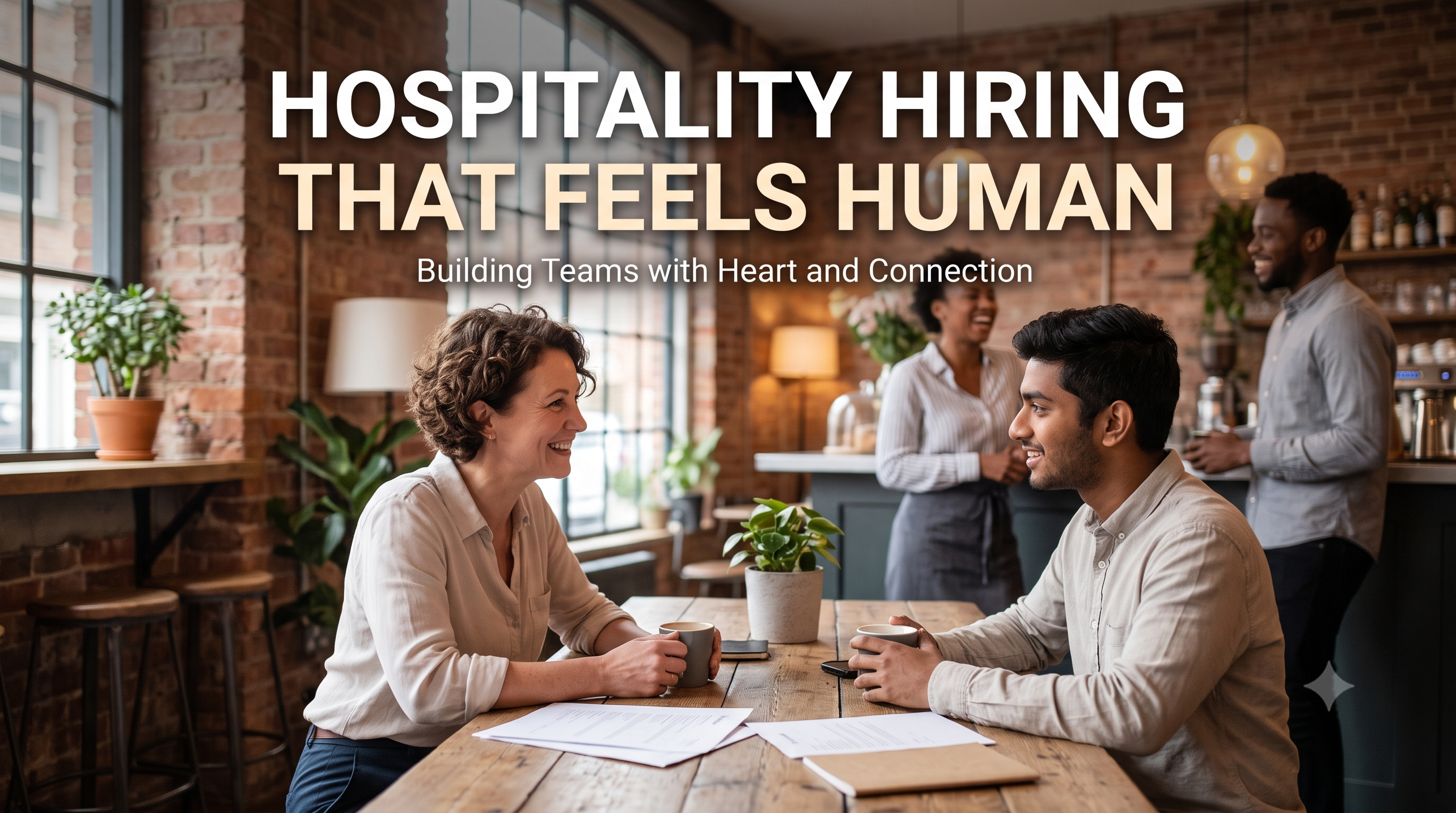
Hospitality has always been a people business. Guests remember the server who noticed a birthday, the front desk associate who solved a problem quickly, and the café worker who remembered a regular order. But behind those moments is a hiring challenge many local businesses know well: finding reliable people, training them quickly, and keeping the team steady when schedules change.
Restaurants and foodservice employers are still hiring, while many operators continue to report difficulty finding experienced managers, chefs, and dependable frontline workers. Hotels face similar pressure as travel demand stays active and labor, insurance, energy, and supply costs remain high. For small and midsize hospitality businesses, hiring cannot be treated as a one-time task. It has to become part of daily operations.
The best hospitality hiring starts before the job post
A strong job post does more than list duties. It answers the questions a candidate is already asking:
- What shift will I actually work?
- How much can I realistically earn?
- Will I be trained, or expected to figure it out?
- Is this manager organized and respectful?
- Can this job become something bigger?
Hospitality candidates often compare multiple opportunities at once. A vague post like “server needed, must be hardworking” gets skipped because it does not reduce uncertainty. A clear post builds trust before the first message.
Instead of: “Looking for experienced restaurant staff.”
Try: “Neighborhood restaurant hiring a part-time evening server. Typical shifts are 4:30 p.m.–10:00 p.m., three to four days per week. Training provided for our POS, menu, and service standards. Prior restaurant experience preferred, but reliability and guest service matter most.”
That version gives the candidate enough detail to decide quickly.
Speed matters, but clarity matters more
In hospitality, the best candidates often respond to whoever gets back to them first. But speed without structure can create confusion. A rushed message that says “Can you come in?” may work once, but it does not create a consistent hiring process.
A better approach is to use a simple three-step flow:
- Confirm fit: availability, location, role interest, and basic experience.
- Explain the next step: phone screen, trial shift, interview, or document check.
- Set expectations: pay range, shift pattern, training period, and start date.
A candidate should never have to guess what happens next.
This matters especially for hourly workers who may be balancing school, family responsibilities, second jobs, or transportation limits. Clear communication makes the job feel more stable before it even begins.
Hire for service habits, then train the system
Experience is helpful, but it is not the only signal. Many great hospitality workers come from adjacent roles: retail, delivery, caregiving, campus jobs, events, cleaning, customer support, or food prep.
Look for habits that transfer:
- Shows up on time
- Communicates schedule conflicts early
- Stays calm with frustrated customers
- Learns routines quickly
- Notices details without being asked
- Treats coworkers with respect
Then train the business-specific system: table numbers, room types, menu language, cleaning sequence, guest handoff, opening checklist, closing checklist, and escalation rules.
The mistake many employers make is expecting new hires to “just know” the local way of doing things. Even experienced workers need a clear playbook.
Retention begins during the first week
The first week often decides whether a new hire stays. If the schedule is unclear, training is informal, or the team seems annoyed by questions, workers may keep looking.
A strong first week does not need to be complicated. It needs to be intentional:
- Send the first schedule before the start date.
- Assign one person to answer basic questions.
- Give a written checklist for the first three shifts.
- Explain how breaks, tips, uniforms, call-outs, and shift swaps work.
- Check in after the first shift and again after the first week.
Small moments of structure make the workplace feel safer and more professional.
Make the job easier to say yes to
Hospitality employers may not be able to control every cost pressure, but they can control how easy the job feels to understand.
A candidate is more likely to say yes when the employer is upfront about:
- Pay range and tip expectations
- Shift start and end times
- Parking or transit access
- Required clothing or uniform costs
- Physical requirements
- Training length
- Growth path into lead, supervisor, cook, bartender, or manager roles
For local businesses, this transparency is not just kind. It saves time. It reduces no-shows, mismatched expectations, and early turnover.
Community is a hiring advantage
Big brands may have larger recruiting budgets, but local hospitality businesses have something powerful: real community connection. A restaurant, café, hotel, bakery, barbershop, market, or event venue is part of a neighborhood. Hiring can reflect that.
Local teams can build talent pipelines through:
- Regular customers who already love the business
- Nearby schools and workforce programs
- Employee referrals
- Community groups
- Local events
- Former seasonal workers
- Candidates who live close enough to commute reliably
When hiring feels local, personal, and respectful, candidates are more likely to respond.
The bottom line
Hospitality hiring is not only about filling shifts. It is about building a team that can create consistent guest experiences under pressure. The businesses that win talent are not always the ones with the fanciest job posts. They are the ones that communicate clearly, move quickly, train intentionally, and treat every candidate like a future regular.
For restaurants, hotels, cafés, and service businesses, the message is simple: make the job clear, make the process human, and make the first week count.
Holly Diamond
Founder & CEO at WorkOnwardHolly "Oh" Diamond is the Founder & CEO of WorkOnward, a map-based platform connecting local talent with local jobs. She is passionate about hourly work, inclusive hiring, and building thriving communities.

Comments
No comments yet.