Key Questions to Ask About a Company's Hybrid Work Policy
Learn essential questions to ask during interviews to evaluate a company's hybrid work policy and ensure it offers true flexibility, not just empty promises.

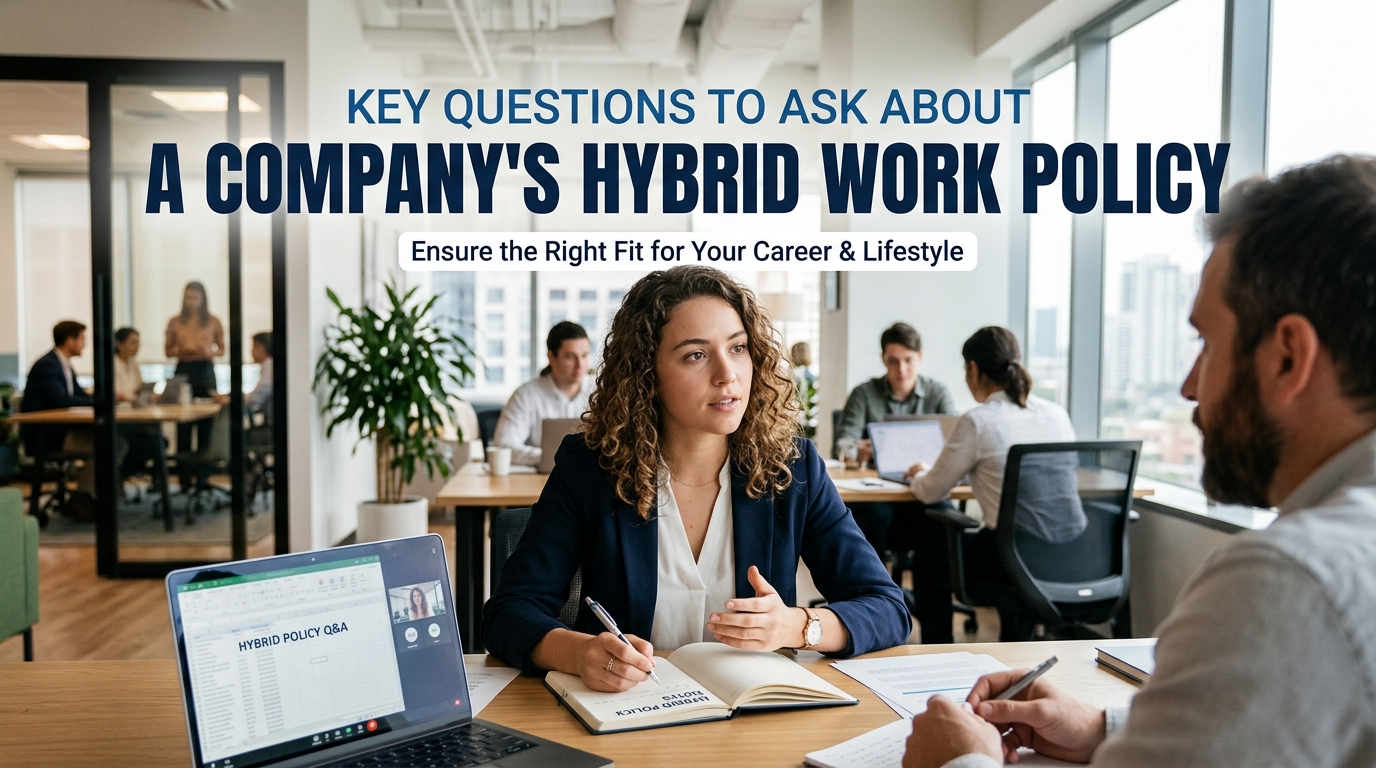
The modern job search has evolved beyond salary negotiations. Today's candidates weigh remote work options just as heavily as compensation packages. They're willing to walk away from offers that don't deliver genuine autonomy and flexibility. However, hybrid policies vary widely. Ask the right strategic questions during your interview to uncover a company's true workplace culture and avoid accepting an offer built on empty promises.
Uncovering "Shadow Policies" Before You Accept the Offer
Some companies advertise hybrid work arrangements in job postings, yet their actual operations, governed by policies that offer fake flexibility, may look much different in reality. These shadow policies look progressive on paper, but turn rigid in practice. Managers require in-person attendance for vague reasons like "team building" or "collaboration" and effectively eliminate the autonomy they promised during recruitment.
Before accepting an offer, ask targeted questions that reveal whether the hybrid policy is genuine or just a recruiting tactic. These strategic questions will help you evaluate whether an organization truly supports flexible work or uses it as a hiring hook.
How Does the Company Define "Flexible Work"?
If an interviewer describes flexibility using terms like "as needed" or "when appropriate", push for specifics. Ask what flexible means practically. Does it mean core hours with location autonomy, or does it require supervisor approval for every remote day?
When interviewers seem uncomfortable or mention that the company grants flexibility "by request", you might be looking at a shadow policy with no genuine commitment. Recent global research shows work-life balance now outranks salary as the top priority for 85% of workers. Location flexibility has become a critical factor in job decisions.
Specific answers about designated remote days, core collaboration hours or output-based expectations signal real commitment. Vague responses that defer to supervisor discretion or suggest you'll need to earn remote privileges might undermine true autonomy.
Who Owns and Enforces the Hybrid Policy?
Inconsistent enforcement breeds resentment and inequality. This happens especially when hybrid work guidelines vary wildly from one supervisor to another. You risk landing in a department where remote work becomes a favor instead of a standard practice. This creates a toxic environment where some employees enjoy autonomy, and leadership overlooks others who stay remote.
Ask your interviewer directly who makes decisions about remote work schedules. Find out whether there's a company-wide standard or supervisor-specific rules. Research shows that 95% of leaders report improved goal progress with clear accountability, and the same principle applies to workplace policies.
When no one clearly owns the hybrid work framework, confusion and favoritism take over. Strong organizations prevent this by establishing transparent guidelines backed by executive leadership.
How Is Performance Measured in a Hybrid Setting?
The tension between surveillance and trust is one of the biggest concerns about remote work. Some companies track badge swipes, monitor screen time or require constant virtual check-ins that make employees feel micromanaged. Others evaluate whether you complete your projects on time.
When you ask how they measure productivity for hybrid workers, listen carefully. Do they focus on deliverables and results, or do they emphasize presence and availability? Studies demonstrate that remote workers can be 20% more productive than their office-based counterparts when trust replaces surveillance.
Organizations that truly embrace hybrid work focus on output rather than optics. They set clear expectations for deadlines and quality and then give employees the autonomy to meet those standards however they work best. Companies stuck in traditional management thinking struggle to let go of visibility as a proxy for productivity. This signals deeper cultural issues you'll face if you accept the role.
How Do You Ensure Remote Staff Have Equal Access to Progression?
Proximity bias is one of the most significant threats to the success of hybrid work. For instance, when supervisors see certain employees in the office every day, they might be more likely to assign high-visibility projects, offer mentorship and consider those individuals for promotions. Remote workers can miss opportunities simply because they're not physically present.
Ask how the organization ensures equitable treatment for off-site employees. Find out whether they have standardized performance reviews, norms for asynchronous communication and promotion tracking in place to identify disparities.
Structured career development programs, documented processes for project assignment and leadership training that addresses proximity bias all signal real commitment.
What Happens if the Hybrid Policy Changes?
Return-to-office mandates have become increasingly common as companies reverse their pandemic-era remote work commitments. Before you accept an offer, ask what circumstances would trigger a policy change. Also, ask how much notice employees would receive. The answer reveals whether the organization views hybrid work as a long-term strategic advantage or a temporary perk they're willing to eliminate.
Organizations committed to autonomy describe hybrid work as core to their talent strategy and operational model. They've invested in technology, redesigned office spaces and trained supervisors to lead distributed teams.
Conversely, organizations treating hybrid work as a reluctant concession hedge their answers. They mention productivity monitoring or policy adjustment rights. This suggests that autonomy sits on unstable ground and remains vulnerable to leadership changes or economic pressure. If you value remote work, these warning signs should factor heavily into your decision.
Protecting Your Future in the Modern Workplace
An interview is a two-way evaluation in which you gather evidence about whether the organization will deliver on its promises. These strategic questions help you move beyond polished recruiting pitches to understand how hybrid work actually functions within the organization.
Real autonomy comes with clear policies, consistent enforcement and cultural buy-in from leadership. Inflexibility reveals itself through uncertain language, supervisor-dependent rules and surveillance-based performance metrics. Ask strategic questions and listen carefully to the responses to secure a truly flexible role that aligns with your professional needs and personal priorities.
April Miller
Senior Writer at WorkOnwardApril writes on enterprise and small business technology. She specializes in translating complex AI and cybersecurity concepts into clear, actionable insights for business audiences.

Comments
No comments yet.